How to Improve Table Turnover Rates Without Rushing Customers
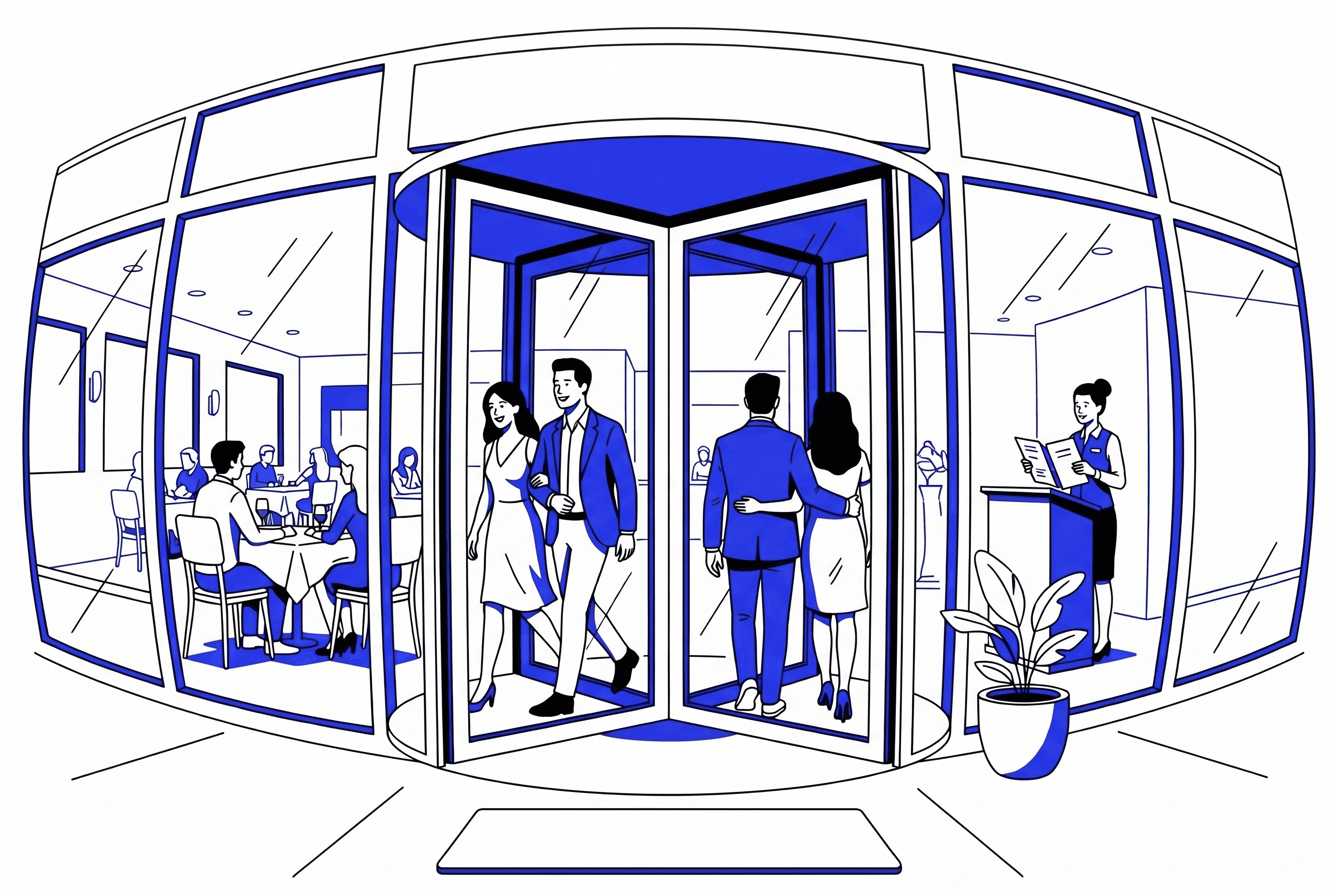
Table turnover rate is the number of times a table is occupied by different parties during a service period. The goal is not to maximize it; it is to optimize it, meaning faster turns without the guest feeling rushed.
Most turnover improvement comes from reducing dead time (the gaps between parties), not from shortening meal duration. Clearing, resetting, and seating the next party faster has more impact than serving the food faster.
Five levers move turnover without hurting the guest experience: pre-bussing during the meal, parallel processes at checkout (bill delivery overlapping with dessert decision), waitlist management that has the next party ready, reservation staggering, and layout optimization.
For multi-location brands, the insight that matters most is the branch-level variance in turnover rate during the same service period. A branch with 20% lower turnover than the average has a process gap, not a demand gap.
Delivery revenue is the counterweight. Brands with strong delivery volume through Keeta, HungerStation, Jahez, and Mrsool can afford slower dine-in turnover because total revenue per hour is not solely dependent on table occupancy.
Table turnover is one of those metrics every operator knows matters and few measure precisely. It sits at the intersection of revenue (more turns equals more covers) and customer experience (too fast and guests feel rushed). Most advice on improving turnover leans toward speed, which is the wrong lens. The right lens is flow.
This article is for multi-location operators in KSA and the region who want to improve dine-in revenue per hour without degrading the experience their brand is built on. We will cover what actually drives turnover, the specific levers that produce improvement, common mistakes, and how to measure the impact across branches.
What table turnover rate actually measures
Table turnover rate is the number of times a table is occupied by different parties during a defined service period. A restaurant with 20 tables that serves 60 parties during dinner has a turnover rate of 3.0 for that period.
For casual dining in the region, a healthy dinner turnover rate is typically between 2.0 and 3.5 turns. For QSR with seating, it can be 5.0 or higher. For fine dining, 1.0 to 1.5 is normal and expected. The target depends entirely on format; comparing your turnover rate to a different format's benchmark is meaningless.
The more useful metric for multi-location brands is turnover variance between branches operating the same format. If Branch A turns tables 2.8 times during Thursday dinner and Branch B turns them 2.1 times with similar demand, the 0.7-turn gap represents a process difference, not a market difference. That gap, multiplied by average check, is recoverable revenue.
Where the time actually goes
Before optimizing turnover, you need to understand where time is spent during a typical table cycle. The cycle has five phases: seating (guest arrives to order placed), dining (order placed to main course finished), lingering (main course finished to check requested), checkout (check requested to payment completed), and reset (payment completed to next party seated).
Most operators assume dining is the longest phase and try to speed up food delivery. In practice, the biggest time sinks are usually lingering and reset. Guests who have finished eating but have not yet asked for the check represent idle table time. The gap between a party leaving and the next party sitting down (clearing, cleaning, resetting, walking the new party over) represents dead time that produces zero revenue.
Reducing dead time (lingering plus reset) by even five minutes per turn on a table that turns three times during dinner is 15 minutes of recovered capacity, which is often enough for a partial additional turn. That is meaningful revenue with zero impact on the dining experience.
Five levers that move turnover without rushing guests
1. Pre-bussing during the meal
Clearing finished plates, used napkins, and empty glasses while the guest is still dining (rather than waiting until the table is fully vacated) reduces the post-departure reset time by two to four minutes. It also signals attentiveness, not pressure. Guests perceive pre-bussing as good service, not as being rushed, provided it is done gracefully.
2. Parallel processes at checkout
Most checkout sequences are serial: guest finishes, waits, asks for check, waits, receives check, decides on payment, waits, pays, leaves. Each wait is idle time. The fix is parallelizing: deliver the check proactively when the main course plates are cleared ("Whenever you're ready, no rush"), offer dessert and the check simultaneously so the decision happens in parallel, and process payment at the table with a mobile POS device rather than taking the card to a terminal and returning.
3. Waitlist management that pre-stages the next party
The gap between one party leaving and the next party sitting down is often longer than necessary because the next party is not ready. They are outside, they need to be called, they need to gather their group. A waitlist system that notifies the next party five minutes before the table is expected to open (based on the current party's stage in the cycle) can reduce dead time to under two minutes per turn.
4. Reservation staggering
If all reservations for the evening are clustered at 7:00 and 9:00, the kitchen and service team spike at those times and idle between them. Staggering reservations in 15 or 20 minute intervals spreads the load, reduces wait times, and creates a steadier flow of turns through the evening. This requires a reservation system with staggering logic (Servme, Eat App, and most modern platforms support this) and discipline about not overriding it for VIP or walk-in seating.
5. Layout optimization
Table sizes and configurations that match your typical party size distribution produce better turnover than fixed layouts. If 60% of your parties are groups of two and 40% of your tables seat four, you are over-investing in four-tops that half-fill during peaks. Flexible seating (tables that can split or combine) and a layout that minimizes server travel distance both contribute to faster turns without any change in the guest experience.
The delivery counterweight
One of the underappreciated dynamics in KSA's F&B market is that strong delivery revenue through Keeta, HungerStation, Jahez, and Mrsool changes the economics of table turnover. A brand generating 40% of revenue from delivery can afford to optimize dine-in turnover less aggressively, because total revenue per hour is not solely dependent on table occupancy.
This matters for the experience equation. Brands that depend entirely on dine-in for revenue face constant pressure to turn tables faster. Brands with strong delivery channels can let guests linger, invest in the experience, and still produce healthy revenue per hour. The delivery revenue subsidizes the dine-in experience, and the dine-in experience drives the brand perception that feeds delivery demand. It is a reinforcing loop, and understanding it changes how aggressively you need to pursue turnover targets.
Common mistakes
Rushing guests visibly. Clearing plates while guests are still eating, hovering with the check, or making comments about the next party waiting. This destroys the experience and produces negative reviews that cost more than the recovered table time is worth.
Optimizing meal speed instead of dead time. Shortening cook times or rushing plating to turn tables faster degrades food quality. The improvement should come from the gaps between parties (reset and lingering), not from the meal itself.
Setting a single turnover target for all branches. Branches with different demand patterns, layouts, and party size distributions should have different targets. The useful comparison is branch-to-branch variance during the same period, not absolute turnover against a fixed number.
Ignoring the data. Most POS systems can produce table-level timing data (time seated to check closed). Most operators never pull it. Without this data, turnover optimization is guesswork. With it, you can identify exactly which phase of the table cycle is the bottleneck in each branch.
Measuring across branches
For multi-location brands, the measurement framework is: turnover rate by branch by service period (lunch, dinner, weekend), average table cycle time by phase (seating, dining, lingering, checkout, reset), dead time per turn (reset duration), and revenue per available seat-hour (RevPASH), which combines turnover rate and average check into a single metric.
RevPASH is the metric that matters most for financial decision-making because it accounts for both turnover and spend. A branch with high turnover but low average check may produce less revenue per seat-hour than a branch with lower turnover and higher check. The two need to be seen together.
Customer feedback adds a qualitative layer. Complaints about feeling rushed, long waits for seating, or slow check delivery are all signals that the turnover levers need adjustment. A customer intelligence platform that classifies complaints by category and links them to specific branches and time periods makes this actionable rather than anecdotal.
Conclusion
Improving table turnover is a flow problem, not a speed problem. The goal is not to move guests through faster; it is to reduce the dead time between parties, parallelize the checkout process, and match your seating layout to your demand pattern. The guest should never feel the optimization.
For multi-location brands, the most powerful tool is cross-branch comparison: identifying which branches turn tables efficiently and which do not, then diagnosing the process gap. Combined with delivery revenue data (which changes how aggressively turnover needs to be pursued), the operator can set realistic, format-specific targets and measure against them with POS timing data and customer feedback analysis.
Frequently asked questions
What is a good table turnover rate for a restaurant?
It depends on format. For casual dining in KSA and the region, a healthy dinner turnover rate is typically 2.0 to 3.5 turns. For QSR with seating, 5.0 or higher is common. For fine dining, 1.0 to 1.5 is expected. The more useful benchmark for multi-location brands is turnover variance between branches operating the same format during the same service period. A branch turning tables 0.7 times fewer than the average during the same period has a process gap, not a market gap.
How do you increase table turnover without rushing customers?
Focus on reducing dead time (the gaps between parties), not meal duration. Five levers: pre-bussing during the meal, parallel checkout processes (delivering the check proactively, processing payment at the table), waitlist management that pre-stages the next party before the table opens, reservation staggering across 15-20 minute intervals, and layout optimization to match table sizes to typical party size distribution. The guest should never feel the optimization; the improvement comes from the edges of the cycle, not the core of the meal.
What is RevPASH and why does it matter?
RevPASH (Revenue Per Available Seat-Hour) combines table turnover rate and average check into a single metric. It accounts for both how many times a seat is used and how much each use produces. A branch with high turnover but low check may generate less RevPASH than a branch with lower turnover and higher check. For multi-location brands, RevPASH is the most useful financial metric for comparing dine-in performance across branches because it captures the full revenue picture, not just speed.
How does delivery revenue affect table turnover strategy?
Strong delivery revenue through platforms like Keeta, HungerStation, Jahez, and Mrsool changes the economics of dine-in turnover. Brands generating 30 to 60% of revenue from delivery can afford to optimize dine-in turnover less aggressively because total revenue per hour is not solely dependent on table occupancy. This allows the brand to invest in a better dine-in experience (letting guests linger, longer service touches) while maintaining healthy total revenue. Delivery revenue effectively subsidizes the dine-in experience.
How do you measure table turnover across multiple branches?
Four metrics: turnover rate by branch by service period, average table cycle time by phase (seating, dining, lingering, checkout, reset), dead time per turn (reset duration), and RevPASH. Most POS systems can produce table-level timing data that supports this analysis. Customer feedback adds a qualitative layer: complaints about being rushed or long wait times signal that turnover levers need adjustment. The key for multi-location brands is cross-branch comparison during the same period, which reveals process gaps rather than demand differences.
What is the biggest mistake operators make when trying to improve turnover?
Rushing guests visibly: clearing plates while guests are eating, hovering with the check, or commenting about the next party. This trades a few minutes of table time for a negative experience that produces bad reviews and reduces return visits. The cost of a negative review (in lost future visits) almost always exceeds the revenue from one additional turn. The improvement should come from dead time between parties and parallel checkout processes, never from making the guest feel pressured during their meal.