Delivery Apps in Saudi Arabia: What Every Restaurant Operator Needs to Know in 2026
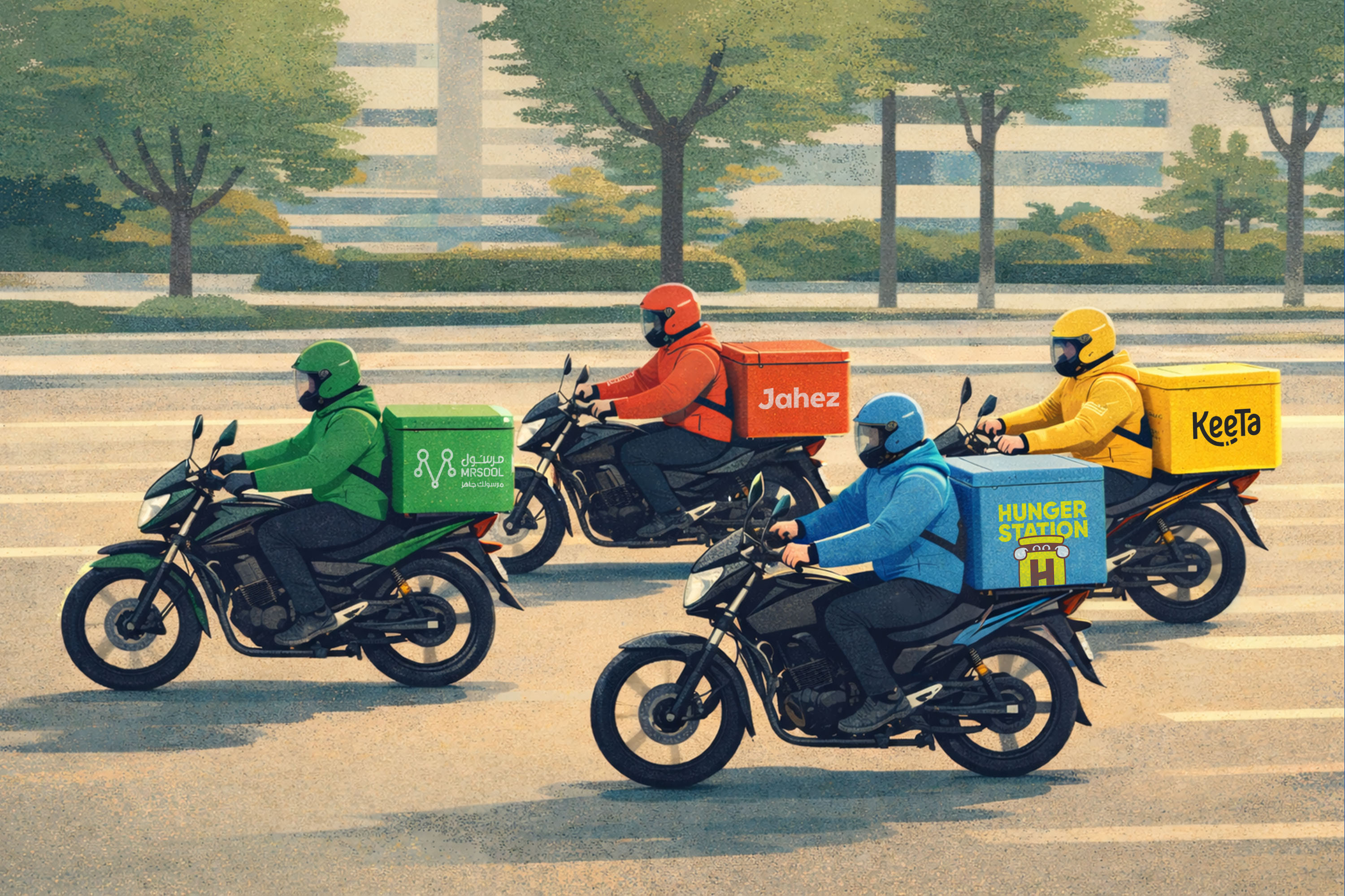
If you operate a restaurant in Saudi Arabia, delivery is not a side channel. It is a core part of your business. For many operators, especially those in major cities like Riyadh and Jeddah, delivery orders now represent 40 to 60 percent of total revenue. The platforms that facilitate those orders, Keeta, HungerStation, Mrsool, and Jahez, are not just logistics providers. They are the storefront, the marketing channel, and the customer feedback system all rolled into one.
Understanding how these platforms work, where they differ, and what operators often get wrong is essential for anyone running a multi-location restaurant brand in the Kingdom.
The Big Four: A Quick Overview
Keeta
Keeta is the international arm of Meituan, China's largest food delivery platform. It entered the Saudi market in September 2024 and has grown at a pace few expected. By late 2025, it had captured roughly a third of the market by order volume, making it the second-largest platform in the Kingdom. Keeta entered aggressively, with free delivery, sign-up vouchers, and a reported investment of 1 billion SAR ($266.6 million) in local infrastructure. It now partners with over 13,000 restaurants and has registered more than 15,000 riders. For operators, Keeta represents a fast-growing customer base, particularly among younger, price-sensitive consumers, and one that cannot be ignored given its trajectory.
HungerStation
HungerStation is the homegrown champion. Launched in Saudi Arabia, it has deep penetration across the Kingdom, including in secondary cities where other platforms have thinner coverage. It remains the market leader by order share. HungerStation is owned by Delivery Hero and continues to operate as a standalone brand with its own loyal customer base. For operators, it often reaches a different demographic than newer entrants, and its rating system has its own dynamics worth understanding on its own terms.
Mrsool
Mrsool started as a peer-to-peer delivery service and has evolved into a more structured restaurant delivery platform. It retains a loyal user base in Saudi Arabia, particularly among younger consumers. Mrsool's model can mean less control over the delivery experience compared to HungerStation or Keeta, which is something operators need to account for when managing their reputation on the platform.
Jahez
Jahez is a Saudi-founded, publicly listed delivery company. It has invested heavily in logistics infrastructure and maintains a strong presence in the Kingdom. Jahez tends to be particularly strong in specific city clusters and has built a reputation for reliability. For operators, it represents another channel that needs active management, with its own rating dynamics and its own customer base.
What Most Operators Get Wrong
Treating All Platforms the Same
Each platform has a different algorithm for how it ranks restaurants, different customer demographics, and different review dynamics. A strategy that works on HungerStation may not translate directly to Keeta or Mrsool. Operators need to understand each platform on its own terms, including that Keeta's aggressive pricing has brought in a deal-driven customer segment that may behave differently from a loyalty-driven HungerStation user.
Ignoring Delivery App Reviews
Many operators obsess over Google reviews but completely ignore what customers are saying on delivery platforms. This is a mistake. Delivery app reviews directly affect your ranking and visibility on the platform, which directly affects your order volume. A restaurant that drops from 4.5 to 4.2 on any of these platforms will see a measurable decline in orders, even if nothing else changes.
Not Connecting Delivery Data to Operations
When a customer complains about cold food on HungerStation, the root cause might be kitchen prep time, packaging, or the delivery partner's route. Most operators have no way to connect delivery feedback to the specific operational issue that caused it. Without this connection, you are fixing symptoms, not causes.
Underinvesting in Packaging
The delivery experience is fundamentally different from the dine-in experience. Food that looks beautiful on a plate may not survive a 20-minute ride on a motorcycle. Packaging that keeps food hot, prevents spills, and presents well on arrival is not a cost. It is an investment in your delivery ratings and repeat order rate.
The Economics of Delivery in KSA
Commission rates on delivery platforms typically range from 15 to 30 percent of order value. For a restaurant with thin margins, this can feel punitive. But the math changes when you consider that delivery orders often have no table cost, no front-of-house labor, and no real estate footprint beyond the kitchen. Note that Keeta has been operating with subsidized delivery fees as part of its market entry strategy, which may affect how operators think about their unit economics on that platform over time.
The operators who make delivery profitable are the ones who design for it: optimized menus with delivery-friendly items, efficient kitchen workflows that separate delivery prep from dine-in, and packaging that reduces waste and complaints. They also actively manage their platform presence to maintain high visibility and ratings, which reduces the cost of customer acquisition over time.
What Is Changing in 2026
The Saudi delivery landscape has shifted significantly in the past 18 months. Keeta's entry has disrupted pricing expectations for consumers and forced HungerStation and Jahez to respond competitively. For operators, this creates both an opportunity and a risk: more customer choice means more eyes on your listings, but also more comparison and less platform loyalty.
There is also a growing expectation of real-time feedback management on delivery platforms. Customers expect prompt responses to their reviews, and platforms are increasingly factoring response rates into their ranking algorithms. Operators who treat delivery platform reputation management as a core function, rather than an afterthought, will have a structural advantage.
Building a Delivery Strategy That Scales
For multi-location operators in Saudi Arabia, a strong delivery strategy requires three things: a delivery-optimized menu and kitchen workflow, active management of your presence and reputation on each platform, and the ability to connect delivery feedback to operational improvements.
The last point is the hardest, and the most valuable. When you can see that complaints about missing items spike on Tuesdays at your Dammam branch, or that your Mrsool ratings consistently lag behind your HungerStation ratings at the same locations, you have the intelligence to take targeted action. Without it, you are guessing.
For operators building toward that standard, the infrastructure question is less about which channels to monitor and more about whether the signals from all of them are reaching the people who can actually do something about it. That is the problem platforms like Sira are built to solve.