Restaurant Marketing Ideas and Social Media Tactics for 2026
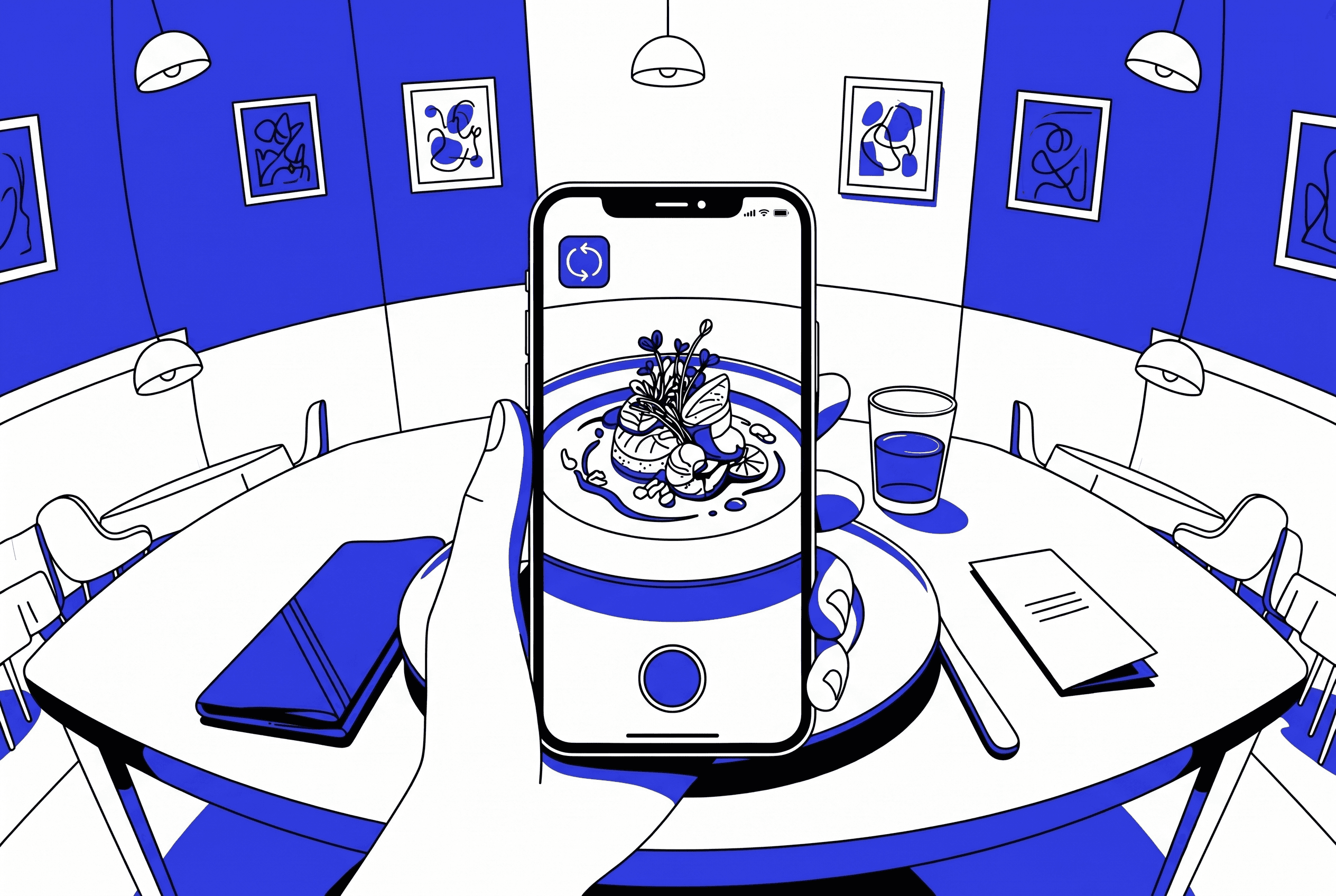
The most reliable restaurant marketing in 2026 is not the most innovative. The fundamentals (consistent posting, active reviews, retention through loyalty, delivery platform optimization) outperform novelty most of the time.
The split between social, email, review, loyalty, and delivery channels matters. Brands that over-index on one channel usually leave value on the table in others.
This guide covers 19 tactics across 5 channels, with notes on which work for different sizes of brand and operational style.
The brands that compound over time pick a small number of these tactics to execute consistently rather than trying to do everything at once.
How to use this list
This is not a list of ranked tactics. The right combination depends on the brand, the operational scale, the customer base, and the marketing budget. A QSR brand with 50 locations needs a different mix than an independent fine dining restaurant. The list below covers tactics across five channels, with notes on which fit which situations.
The brands that get the most value from marketing tactics are not the ones that try them all. They are the ones that pick 4 to 6 to execute consistently for 6 to 12 months, then evaluate, refine, and consider adding more. Trying everything produces fragmented effort that compounds in nothing.
Social media tactics
1. Post-meal user-generated content amplification
Customers who post photos of their meals and tag the brand are giving free advertising. Most brands underuse this by liking the post and moving on. The tactic that produces compounding benefit is reposting the best customer content (with permission) to the brand's own feed regularly.
The pattern that works is identifying 3 to 5 customer posts per week worth amplifying, getting permission, and reposting with credit. The customer feels recognized (which produces loyalty), the brand gets authentic content for free, and other customers see real people enjoying the food rather than only marketing material.
2. Behind-the-scenes content from the kitchen
Customers respond strongly to content that shows the work behind the food: chefs prepping signature dishes, kitchen techniques, sourcing decisions, the team prepping for service. This content humanizes the brand and signals quality in a way that finished-dish photos cannot.
The constraint is that this content needs to be genuine. Staged or overproduced behind-the-scenes content reads as marketing and underperforms authentic content shot on a phone. The best version is a chef or kitchen team member with permission to post directly, with light brand oversight.
3. Local micro-influencer partnerships
Mega-influencers with millions of followers produce minimal restaurant business in most markets. Local micro-influencers with 5,000 to 50,000 followers in a specific city or neighborhood produce significantly more measurable results, because their audience is geographically concentrated and the engagement is higher.
The tactic that works for restaurants is identifying 5 to 10 local micro-influencers per market, inviting them to dine (with appropriate disclosure), and giving them content freedom rather than scripted posts. The cost per acquired customer through this approach is usually significantly lower than paid advertising.
4. Limited-time visual identities for menu items
Limited-time menu items get more social engagement when they have their own visual identity: distinctive plating, branded photography, themed packaging. The tactic is to treat each major LTO as a mini-campaign with consistent visual treatment across menu, in-store signage, social posts, and delivery platform photos.
Brands that do this well see LTOs drive social engagement that exceeds the LTO's direct revenue, which produces brand benefit beyond the menu item itself.
Email and SMS tactics
5. Birthday programs that actually use birthday data
Many loyalty programs collect birthday information and never use it meaningfully. The tactic that works is sending a personalized offer one week before the birthday (giving the customer time to plan a visit) with enough value to actually motivate a visit (a free dessert, a specific discount, an upgraded experience). Generic 'happy birthday from us' messages without an offer underperform.
6. Lapsed customer reactivation campaigns
Customers who have not visited in 60 to 90 days are at risk of becoming permanently lapsed. A reactivation campaign with a strong offer (often more aggressive than typical promotions) can recover a meaningful percentage. The tactic that works is segmenting customers by recency, sending differentiated offers (more aggressive offers for longer-lapsed customers), and tracking reactivation rates by segment.
7. Post-visit content sequences
After a customer visits, a sequence of 3 to 4 emails over the following weeks can drive return visits significantly more than single follow-ups. The sequence might include a thank-you with feedback prompt, a recommendation based on what they ordered, a relevant offer for their next visit, and a content-focused message about the restaurant's story or values.
8. SMS for time-sensitive offers
SMS open rates are above 90%, compared to 20% to 30% for email. For time-sensitive offers (today only, this weekend, expiring tonight), SMS produces significantly better response. The tactic works best when used selectively rather than as a general communication channel; over-using SMS produces opt-outs faster than email.
Review and reputation tactics
9. Active review response as a marketing channel
Most brands treat reviews as customer service. The brands that get the most value treat them as a marketing channel. Every public response is visible to future customers reading the profile, and the response pattern shapes brand perception more than the rating itself in many cases.
The tactic that works is treating review responses as content: specific, warm, on-brand, and consistent across locations. The detailed framework for this is in the guide on responding to restaurant reviews.
10. Review prompt timing optimization
Most brands send review requests at standard times after a visit. Optimizing the timing (different timing for delivery vs. dine-in, different timing for first-time vs. repeat customers, different timing for different dayparts) can improve response rates significantly without changing the volume of requests sent.
11. Internal feedback that closes the loop visibly
Customers who give feedback through internal channels (surveys, comment cards, in-app feedback) and see visible action become more loyal than customers who never gave feedback in the first place. The tactic is to publicize the changes that came from customer feedback ('we added vegetarian options because you asked' or 'we extended weekend hours after consistent requests').
This works as a marketing channel because it signals attentiveness to all customers, not just the ones who gave feedback.
Loyalty and retention tactics
12. Loyalty program redemption events
Loyalty programs often see strong sign-up and accumulation but weak redemption. Customers who do not redeem do not realize the value of the program and become disengaged. The tactic that works is periodic redemption events: time windows when redemption rates are boosted, or specific menu items that can be redeemed for fewer points. These drive engagement spikes that pull lapsed members back into active participation.
13. Tiered loyalty with status visibility
Loyalty programs with visible status tiers (silver, gold, platinum, or whatever the brand uses) outperform flat programs because customers actively work toward the next tier. The tactic that works is making the status visible (in the app, on the receipt, in communication) and making the next tier feel achievable. Status tiers that feel unattainable produce disengagement.
14. Personalized recommendations based on order history
Brands with order history data can use it to recommend menu items the customer has not tried. The tactic works through email, SMS, or app notifications: 'we noticed you love our pasta dishes; you might like our new lobster ravioli.' Specific, data-driven recommendations significantly outperform generic promotional content.
Delivery platform tactics
15. Active delivery platform presence management
For most modern restaurant brands, delivery platforms (Talabat, HungerStation, Keeta, Deliveroo, Mrsool, Jahez, Instashop in MENA) drive a meaningful share of revenue. The tactic that produces ongoing benefit is managing presence on these platforms with the same discipline as Google: photos updated regularly, descriptions optimized, reviews responded to, menu items featured strategically.
Most brands treat delivery platform profiles as set-and-forget. The brands that actively manage them see meaningful order volume gains over time.
16. Platform-specific limited-time offers
Each delivery platform has its own customer base and different patterns of usage. Platform-specific LTOs (an exclusive item on one platform, a discount only available on another) drive more attention from each platform's algorithm than generic offers running across all platforms simultaneously.
17. Bundling for higher average order values
Delivery customers tend to have lower average order values than dine-in customers because they cannot share dishes the same way. Bundle offerings (a complete meal for two, a family pack, a Friday combo) increase average order values and produce better unit economics on delivery orders.
In-store and operational tactics
18. Local community partnerships
Restaurants that partner with local businesses (gyms, coworking spaces, hotels, schools) for cross-promotion produce sustained foot traffic that does not depend on advertising. The tactic works through reciprocal arrangements: discount cards exchanged, joint events hosted, recommendations exchanged with concierges and front desks.
This is slow-build marketing that compounds over time. Brands that invest in 5 to 10 strong local partnerships per location see meaningful traffic from each.
19. In-store experience details that produce social content
Specific in-store details that customers spontaneously photograph and share produce free social marketing. The tactic is identifying the elements of the restaurant most photogenic (a signature dish presented dramatically, a unique interior element, a memorable plating choice, a distinctive packaging design for takeout) and ensuring they are consistent across visits.
This is not about making the restaurant Instagrammable in a tacky way. It is about identifying what is genuinely beautiful or memorable and ensuring customers see it reliably.
How to choose a starting point
A multi-location restaurant brand starting from low marketing maturity should not try all 19 tactics. The starting point depends on the brand's biggest gap.
Brand situation | Where to start |
|---|---|
Strong food, weak online presence | GBP optimization, review response, social media basics |
Strong dine-in, weak delivery performance | Delivery platform presence, platform-specific LTOs, bundling |
Strong individual location, weak portfolio consistency | Brand-level standards across reviews, social, GBP, loyalty |
Strong portfolio, weak retention | Loyalty program design, post-visit sequences, lapsed customer reactivation |
Strong everything, looking for incremental growth | Micro-influencer partnerships, community partnerships, UGC amplification |
The right number of tactics to execute simultaneously is 4 to 6 for most brands. Above that, attention fragments and execution quality drops. Below that, the brand misses meaningful opportunities.
How Sira supports several of these tactics
Sira covers the customer-facing layer of several of the tactics above. The platform handles review response at scale across Google, delivery platforms, and social channels. The internal feedback module supports the closed-loop tactic that turns survey responses into visible operational change. The presence management module covers GBP optimization and delivery platform profile management for the active presence tactics.
For multi-location brands operating in MENA, the unified workspace across these channels reduces the operational overhead that fragmented tools usually produce. Brands running 4 to 6 of the tactics above through Sira typically see compounding benefit within 6 months as the practices become operational discipline rather than periodic campaigns.
Frequently asked questions
How much should restaurant brands spend on marketing?
Mid-market multi-location brands typically spend 3 to 6% of revenue on marketing across all channels. Below 3% usually means the brand is underinvesting; above 6% usually means the brand is paying for inefficient channels. The right level varies by brand maturity, competitive intensity, and operational scale.
What is the highest-ROI marketing channel for restaurants?
It depends entirely on the brand's situation. For brands with weak online presence, GBP and review optimization usually produce the highest ROI. For brands with strong online presence but weak retention, loyalty programs do. For brands with strong retention but weak acquisition, local partnerships and micro-influencer work usually do. The right channel is the one that addresses the brand's biggest gap.
Should we run paid advertising on Google or Meta?
For most multi-location brands, paid advertising should come after organic optimization, not before. A brand with weak organic presence amplifies its weakness through paid spend. Once the GBP, review, and social presence are strong, paid advertising can extend reach. Spending on paid before fixing organic usually produces worse ROI than fixing organic first.
How do we measure the impact of these tactics?
Per-tactic measurement is hard because most marketing impact is multi-touch. The pragmatic approach is measuring the brand-level outcomes (revenue per location, repeat visit rate, customer acquisition cost, brand search volume) and attributing changes to the tactic mix rather than individual tactics. Pure attribution per tactic is usually impossible without more data infrastructure than most brands have.
Are these tactics still relevant given AI-driven changes in marketing?
Yes. AI changes how content is created and how data is analyzed, but the underlying customer behavior that drives these tactics is unchanged. Customers still trust UGC over branded content. Loyalty programs still work when designed correctly. Local presence still drives discovery decisions. AI tools make the tactics easier to execute at scale; they do not replace the tactics.