How Saudi Arabia's Vision 2030 Is Reshaping the Restaurant Industry
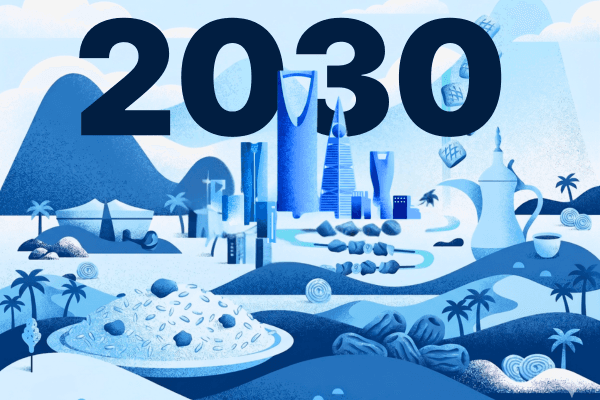
Saudi Arabia's restaurant industry is in the middle of a transformation that would have been difficult to imagine a decade ago. Driven by Vision 2030's ambitious economic diversification agenda, the Kingdom's food and beverage sector has evolved from a largely informal, fragmented market into one of the fastest-growing F&B ecosystems in the Middle East. For restaurant operators, understanding what this shift means is no longer optional. It is the difference between scaling successfully and being left behind.
The Numbers Behind the Boom
Saudi Arabia is now home to more than 132,000 restaurants, cafes, and bakeries. That number has grown steadily over the past five years, fueled by a young population (more than 60% of Saudis are under 35), rising disposable income, and a government that has made tourism and entertainment central pillars of its national strategy. The Saudi F&B market reached approximately $30 billion in 2025 and is projected to grow to $44 to $48 billion by 2030, making it the largest food service market in the GCC by a significant margin.
Vision 2030's tourism targets are accelerating this growth. The Kingdom aims to attract 150 million visits per year by 2030. Saudi Arabia reached its original 100 million target ahead of schedule in 2023, welcomed 116 million visitors in 2024, and an estimated 122 million in 2025. Mega-projects like NEOM, The Red Sea, and AlUla are being designed with hospitality and dining infrastructure at their core. Riyadh alone is positioning itself as a global events capital, with Riyadh Season drawing tens of millions of visitors each year.
For multi-location restaurant operators, this means demand is not just growing. It is being structurally engineered to grow. The question is whether your operations are ready to meet it.
How Vision 2030 Is Changing Restaurant Operations
The impact of Vision 2030 on restaurants goes far beyond increased foot traffic. Several structural changes are reshaping how operators need to think about their businesses.
Saudization and Workforce Transformation
The Nitaqat program and related labor policies are increasing the percentage of Saudi nationals required in the hospitality workforce. For restaurant operators, this means higher labor costs, longer training cycles, and a need for better retention strategies. Operators who rely on high-turnover, low-cost labor models will find those models increasingly unsustainable.
The upside is that Saudi employees bring stronger local market knowledge and cultural alignment with customers. Brands that invest in training and development are finding that Saudization, while challenging, can actually improve service quality and customer satisfaction when implemented well.
The Rise of Delivery and Dark Kitchens
Saudi Arabia's food delivery market has exploded. Platforms like HungerStation, Jahez, Mrsool, and Keeta now account for a significant share of total restaurant revenue in major cities. Some operators report that delivery represents 40 to 60% of their total orders. This shift has spawned a wave of cloud kitchens and delivery-first concepts, particularly in Riyadh and Jeddah.
For traditional dine-in brands, the challenge is managing two very different customer experiences simultaneously: one in the restaurant and one through a screen. Each has its own quality standards, feedback loops, and operational requirements. Operators who treat delivery as an afterthought are seeing it show up in their ratings and reviews.
Tourism-Driven Demand Peaks
Riyadh Season, Jeddah Season, Ramadan, and major events like Formula E and WWE are creating massive, predictable demand spikes. These events can double or triple foot traffic in specific areas for weeks at a time. Operators need the ability to scale staffing, inventory, and service capacity quickly, and then scale back down without losing quality or consistency.
The operators who win during these peaks are the ones with strong operational systems, real-time visibility into performance, and the ability to identify and fix problems before they show up in customer reviews.
Technology Adoption Is No Longer Optional
Vision 2030 has also created a technology-forward regulatory environment. The Saudi government is actively encouraging digital transformation across all sectors, including hospitality. POS systems, inventory management software, and customer experience platforms are no longer nice-to-haves. They are table stakes for any operator serious about growth.
The gap between technology-enabled operators and those still relying on manual processes is widening. Brands that use data to understand customer behavior, monitor feedback in real time, and optimize their operations are consistently outperforming those that do not. This is especially true for multi-location operators, where visibility across branches is the single biggest operational challenge.
Customer intelligence platforms, which aggregate data from delivery apps, Google reviews, social media, and internal surveys into a single view, are emerging as a critical layer in the restaurant tech stack. The ability to understand what customers are saying across every channel and translate that into operational action is becoming a competitive advantage that compounds over time.
What This Means for Multi-Location Operators
If you operate 5 to 50 restaurant locations in Saudi Arabia, here is what the Vision 2030 landscape means for your business:
First, growth opportunities are real but not guaranteed. The market is expanding, but so is competition. New local and international brands are entering the Kingdom every month. Differentiation through customer experience, not just menu or price, is what separates the brands that scale from those that plateau.
Second, operational consistency is your biggest risk. Every new location you open is another point of potential failure. If your 15th branch delivers a different experience than your 3rd, customers will notice. And in a market where Google reviews and delivery app ratings are the first thing potential customers see, inconsistency costs real revenue.
Third, the cost of not knowing is higher than ever. With delivery platforms, Google, social media, and in-store interactions generating customer data points around the clock, the operators who collect, analyze, and act on that data will have an information advantage that is very difficult to compete against.
The Bottom Line
Vision 2030 is a structural shift in how Saudi Arabia's economy works, and the restaurant industry is one of its primary beneficiaries. But the operators who benefit most will not be the ones who simply ride the wave of increased demand. They will be the ones who build the operational infrastructure, customer intelligence capabilities, and workforce strategies needed to deliver consistent, high-quality experiences at scale.
Tools like Sira are designed for exactly this gap, giving operators a unified view of what customers are saying across every channel, in Arabic, and surfacing the patterns that traditional tools cannot catch at scale.