Best Restaurant Inventory Management Software in Saudi Arabia (2026)
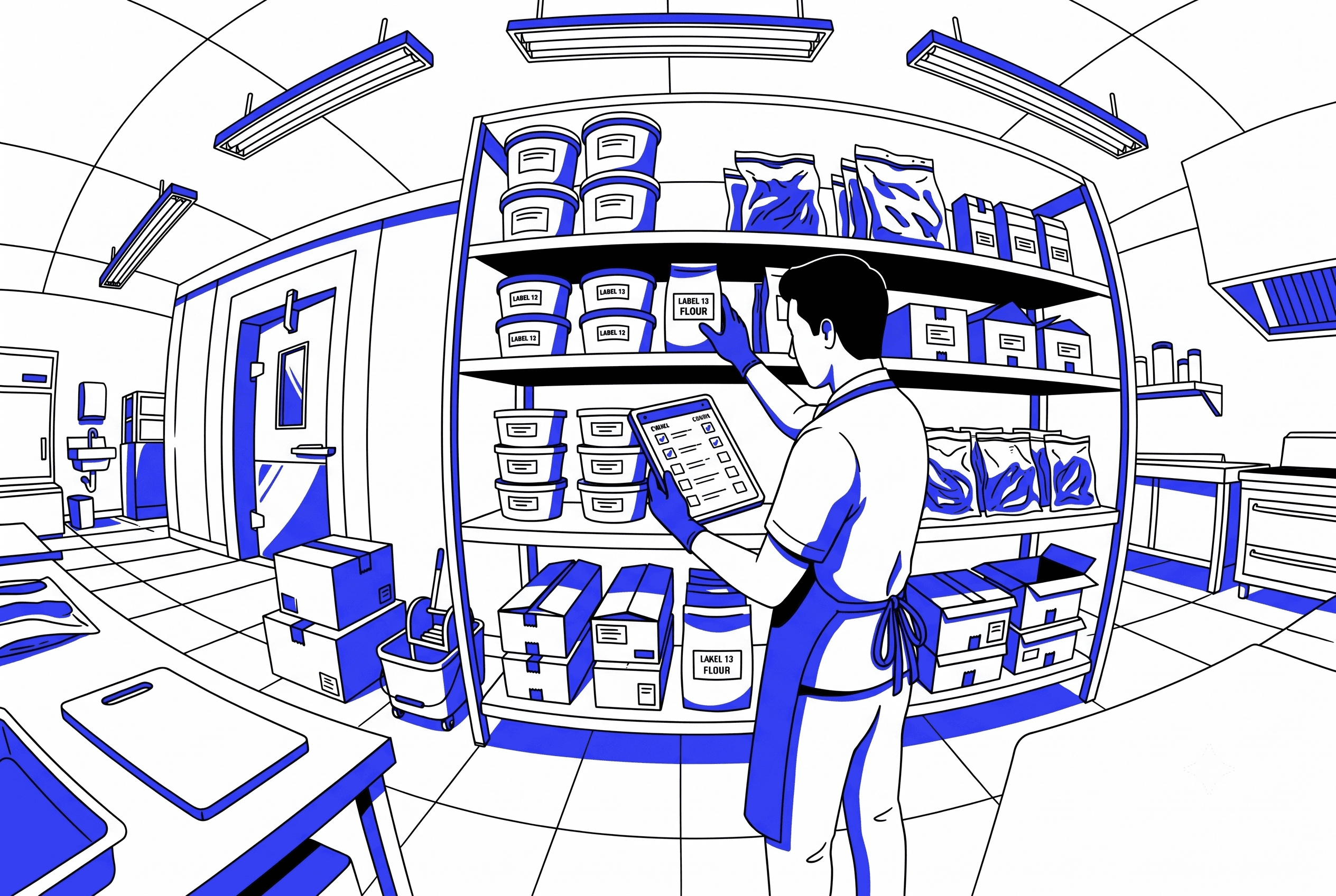
Saudi Arabia wastes roughly SAR 40 billion in food per year, with 33% of food wasted across the kingdom. For multi-location restaurants, inventory management is one of the highest-leverage operational disciplines.
The strongest inventory management platforms for KSA restaurants in 2026 are Foodics (deepest integration with regional POS), MarketMan (best standalone inventory platform), Apicbase (recipe-first), Stocktake Online (Gulf-focused AI tools), and Syrve.
Software alone doesn't reduce food waste. The operational practices that matter are weekly stocktakes, recipe-driven theoretical food cost analysis, par-level discipline, supplier consolidation, and tying branch-level variance to manager accountability.
Multi-location operators should evaluate inventory tools against integration depth with their existing POS, accuracy of recipe and theoretical food cost calculation, multi-branch consolidation features, and ZATCA-compliant invoice handling.
The realistic ROI from a properly run inventory program is 2-5 percent of food cost recovered annually, which often pays for the software within the first quarter.
Inventory management is the most underrated operational discipline in F&B. Food cost is usually a brand's second or third largest expense line, and the variance between theoretical food cost (what your recipes say you should be spending) and actual food cost (what you're actually spending) is where most of the recoverable margin sits.
In Saudi Arabia specifically, the stakes are high. The kingdom wastes roughly SAR 40 billion in food per year, with 33% of food wasted at the country level. For a 20-location brand, even a single percentage point of food cost recovered translates to meaningful annual savings. Most operators leave that money on the table because they don't have the infrastructure to find it.
This post covers the best restaurant inventory management software available in KSA in 2026, the operational practices that actually drive results, and the evaluation questions that decide most successful inventory program implementations.
Why inventory management matters more in F&B than most operators think
Food cost in a well-run restaurant is between 28 and 35 percent of revenue. In an under-managed restaurant, it can be 5-10 percentage points higher than it should be, and the operator usually doesn't know it. The gap is hidden by the fact that most P&Ls report actual food cost without separating it into its components: theoretical food cost, waste, spoilage, theft, portioning variance, and supplier price drift.
A serious inventory management program separates those components and assigns ownership to each. Waste becomes the kitchen's problem. Spoilage becomes ordering's problem. Portioning variance becomes training's problem. Supplier price drift becomes procurement's problem. Without that separation, the operator sees a single number on the P&L and has no clear path to act on it.
Multi-location operators also gain a comparison view that single-location operators don't. If branch A is running at 30 percent food cost and branch B at 36 percent on similar menus and similar revenue, the 6-point gap is a clear signal that branch B has an inventory or operational issue worth investigating. Without the data infrastructure to surface that comparison, the gap is invisible.
The leading restaurant inventory management platforms for KSA in 2026
The MENA inventory management software market is less consolidated than POS. Several credible options exist, each with different strengths.
Foodics Inventory
Foodics is primarily known as a POS platform but includes increasingly capable inventory management as part of its higher-tier plans. Strong fit for operators already using Foodics POS who want a single-vendor stack.
Strengths: tight integration with the POS layer (sales automatically flow to inventory tracking), strong regional support, Arabic UI, automated reorder alerts, supplier management. The Advanced plan adds deeper inventory features including more sophisticated tracking.
Limits: less depth on recipe engineering and theoretical food cost analysis than dedicated inventory platforms. Better suited for operators wanting basic-to-mid inventory management as part of their POS stack rather than as a specialized capability.
Best fit: Foodics POS users who want integrated inventory without adding a separate vendor. Most accessible starting point for multi-location operators in KSA.
MarketMan
MarketMan is the most widely cited dedicated restaurant inventory platform globally, with strong presence in MENA through integration with major regional POS systems including Foodics. The platform handles inventory tracking, purchasing, recipe costing, supplier management, and invoice processing.
Strengths: deep recipe-level costing, automated reorder logic, strong invoice scanning capabilities, mobile apps for stock counts. Integrates cleanly with Foodics for sales-driven inventory updates. Multi-location consolidation features for chains.
Limits: pricing starts at $199 per location per month plus setup fees, which is higher than entry-tier alternatives. Some operators find the initial setup time-intensive, particularly the recipe library build-out.
Best fit: serious multi-location operators looking for a dedicated inventory platform with strong recipe and food cost capabilities, particularly those already on Foodics POS.
Apicbase
Apicbase is a recipe-first food management platform that handles inventory, recipe engineering, menu engineering, and procurement. The platform's mobile counting apps include image recognition and barcode scanning for inventory efficiency.
Strengths: very strong on recipe management and menu engineering. Best-in-class for brands that want to manage food cost from the recipe layer down. Modern UI and mobile-first workflows.
Limits: less regional focus than MarketMan or Foodics. Pricing is quote-based and tends to be at the higher end. Better fit for larger chains than for smaller operations.
Best fit: mid-to-large F&B operators who view recipe and menu engineering as a strategic capability worth investing in.
Stocktake Online
Stocktake Online is a Dubai-based inventory platform with growing presence across the GCC including Saudi Arabia. The platform integrates with most major POS systems (including Foodics, Lightspeed, Toast, Square) and emphasizes AI-driven features for invoice scanning and automated stock updates.
Strengths: Gulf-focused with local support, integrates with most regional POS systems, scalable pricing per location, includes ordering, stocktake, recipes, wastage, and reporting in a single subscription. Particularly strong for groups operating across GCC countries.
Limits: newer than MarketMan, with a smaller install base. Less widely cited in operator conversations though presence is growing.
Best fit: GCC-based multi-location operators looking for regional support and broad POS integration coverage.
Syrve
Syrve is an established inventory and back-of-house platform used across multiple regions including MENA. It handles inventory, recipe costing, and procurement with a focus on multi-location operations.
Strengths: long-established platform with deep features, strong for operators with complex requirements. Customizable for specific operational workflows.
Limits: less modern UI than newer competitors. Onboarding can be more involved.
Best fit: established multi-location operators with complex inventory needs and willingness to invest in setup and customization.
Other options worth knowing
xtraCHEF by Toast is strong for operators on Toast POS but Toast itself is not the dominant POS in MENA. Less common in the region.
Crunchtime is enterprise-grade and used by major global chains but priced for that tier.
Supy is a UAE-based back-of-house platform that's gaining traction across the GCC. Worth evaluating for GCC operators.
Best practices for restaurant inventory management
Software is necessary but not sufficient. The operational practices that produce real reductions in food waste and cost variance are independent of which platform you use. The most important ones:
Run weekly stocktakes (at minimum)
Monthly stocktakes are too infrequent. By the time you discover variance, the cause is buried under four weeks of operations. Weekly stocktakes catch variance while the operational signal is still recent enough to act on. The best-run operations do daily checks on high-value or fast-moving items and full counts weekly.
Calculate theoretical food cost from recipes
Most operators look at actual food cost (purchases divided by sales) without comparing it to theoretical food cost (what the recipes say it should be). The gap between the two is where waste, theft, and portioning issues hide. Inventory platforms that calculate theoretical food cost from your recipe library and compare it to actual cost weekly give you a usable variance metric to manage against.
Set and enforce par levels
Par levels are the minimum stock quantities for each ingredient that ensure you don't run out between deliveries. Set them based on usage data, not gut feel. Adjust them quarterly as demand patterns shift. Operators without disciplined par levels either over-order (driving up spoilage) or run out at peak times (driving down service quality).
Consolidate suppliers strategically
Multi-location operators often inherit a fragmented supplier base where each branch has its own suppliers. Consolidating purchasing across branches gives you volume leverage, simpler administration, and better visibility into supplier price drift. The strongest operations have 60-70 percent of food spend with 3-5 strategic suppliers and the rest distributed for resilience.
Track variance by branch and by category
Variance reporting at the brand level hides where the problem is. Variance by branch tells you which locations are over- or under-performing. Variance by category (meat, produce, dairy, dry goods) tells you which parts of the operation have the biggest gaps. Strong inventory platforms produce these breakdowns automatically.
Tie inventory metrics to manager accountability
Most inventory problems are people problems. Branch managers who own their food cost variance and have visibility into the drivers tend to produce dramatically better results than branches where inventory is treated as an administrative function. Build inventory metrics into branch manager performance reviews and incentive structures.
Audit deliveries
Supplier short-shipments and quality issues are a common source of variance. The discipline of checking delivery weights against invoices, sampling quality on receipt, and recording discrepancies for supplier conversations recovers margin that's otherwise lost silently.
Measure waste separately from cost
Waste should be logged as a separate category, not buried in food cost. Operators who track waste daily (production waste, customer plate waste, spoilage) tend to identify root causes faster than operators who only see the aggregate cost number. Categorize waste by cause and review the categories weekly.
How to evaluate an inventory management platform
The evaluation criteria that matter most for multi-location operators in KSA:
POS integration depth. The platform should pull sales data from your POS automatically so theoretical inventory updates in real time. Manual data entry between POS and inventory will not work past a handful of locations.
Recipe and theoretical food cost calculation. Strong platforms calculate cost per portion automatically, compare actual to theoretical food cost weekly, and surface the variance with drill-down to the ingredient level. Weaker platforms only track inventory levels without the analysis layer.
Multi-branch consolidation. Brand-level visibility across all branches with the ability to drill down to branch-level performance is essential for chains. Platforms designed for single-location operations break down at multi-location scale.
ZATCA-compliant invoice handling. Inventory platforms in KSA need to handle ZATCA-compliant supplier invoices, including QR codes and digital records, in a way that integrates with your accounting system.
Usability for branch staff. The people doing daily stocktakes are often kitchen staff with limited tech experience. Platforms that are slow or confusing on mobile devices produce poor data quality and high resistance to adoption.
Reporting and analytics depth. Look beyond standard inventory reports to forecasting, demand prediction, and AI-driven recommendations. The strongest platforms in 2026 surface insights, not just data.
Realistic ROI from an inventory management program
Operators evaluating inventory software often want a clear ROI projection before committing. A few benchmarks from operations we've seen in the region:
A well-implemented inventory program typically recovers 2-5 percent of food cost in the first year. For a 10-location brand running SAR 20M in food spend annually, that's SAR 400K-1M recovered, which generally pays for any of the dedicated inventory platforms within the first quarter.
Waste reduction specifically tends to produce 1-3 percent margin improvement in the first six months, with continued improvement as the program matures.
The largest gains come from the variance analysis layer, not just the inventory tracking. Operators who only use inventory software to track stock levels capture a fraction of the available vale. Operators who use it to drive weekly variance reviews and operational changes capture the rest.
The takeaway
Restaurant inventory management software is a meaningful operational lever for multi-location F&B brands in KSA. The platform options in 2026 include integrated POS-inventory stacks (Foodics) and specialized inventory platforms (MarketMan, Apicbase, Stocktake Online, Syrve), each with different strengths.
The software itself doesn't reduce food waste. The operational practices that drive real results (weekly stocktakes, theoretical food cost analysis, par-level discipline, supplier consolidation, branch-level variance accountability) are what produce the margin improvements. The software is the infrastructure that makes those practices possible at multi-location scale.
The realistic ROI from a properly run program is 2-5 percent of food cost recovered annually, which generally pays for any credible inventory platform within the first quarter. The brands that capture this value are the ones that treat inventory management as an operating discipline, not an administrative task.
Frequently asked questions
What's the best restaurant inventory management software in Saudi Arabia?
There isn't a single best. Foodics is the most widely used option for operators already on its POS platform. MarketMan is the leading dedicated inventory platform with strong Foodics integration. Apicbase is the strongest recipe-first option. Stocktake Online has growing Gulf presence with strong AI features. Syrve is a long-established platform for complex multi-location operations. The right choice depends on POS stack, brand size, and depth of inventory capability needed.
Does Foodics POS include inventory management?
Yes. Foodics includes inventory management in its higher-tier plans, with sales automatically flowing to inventory tracking, automated reorder alerts, and supplier management. For basic-to-mid inventory needs, this is usually sufficient for operators wanting a single-vendor stack. For deeper recipe engineering, theoretical food cost analysis, and complex multi-location consolidation, most serious operators pair Foodics POS with a dedicated inventory platform like MarketMan.
How much food waste do restaurants in Saudi Arabia typically have?
Across Saudi Arabia, roughly 33 percent of food is wasted at the national level, with total annual food waste valued at approximately SAR 40 billion. Restaurant-specific waste varies by format and operational discipline, but unmanaged operations commonly run 5-10 percent of food cost as recoverable variance. Well-run operations with disciplined inventory programs typically operate at 1-3 percent variance from theoretical food cost.
What's the difference between actual and theoretical food cost?
Actual food cost is what you're really spending on food (purchases divided by sales over a period). Theoretical food cost is what your recipes say you should be spending given the volume of menu items sold. The gap between the two is where waste, spoilage, theft, portioning variance, and supplier price drift hide. Inventory platforms that calculate theoretical food cost from your recipe library and compare it to actual cost weekly give you a usable variance metric to manage against, which is one of the highest-leverage capabilities in restaurant operations.
How often should restaurants do inventory counts?
Weekly at minimum for most categories. Daily for high-value or fast-moving items (proteins, premium ingredients, alcohol). Monthly stocktakes are too infrequent for serious cost control because by the time variance is discovered, the operational cause is buried under four weeks of activity. The strongest operations do daily checks on critical items, weekly full counts, and quarterly full audits that include physical recipe verification.
What ROI should restaurants expect from inventory management software?
A well-implemented inventory program typically recovers 2-5 percent of food cost in the first year. For a 10-location brand running SAR 20M in annual food spend, that's SAR 400K-1M in recovered margin, which generally pays for any credible inventory platform within the first quarter. The largest gains come from the variance analysis layer (weekly comparison of actual vs theoretical food cost), not just tracking stock levels. Operators who only use the software for stock tracking capture a fraction of the available value.