Why Google Reviews Disappear (and How to Recover Them)
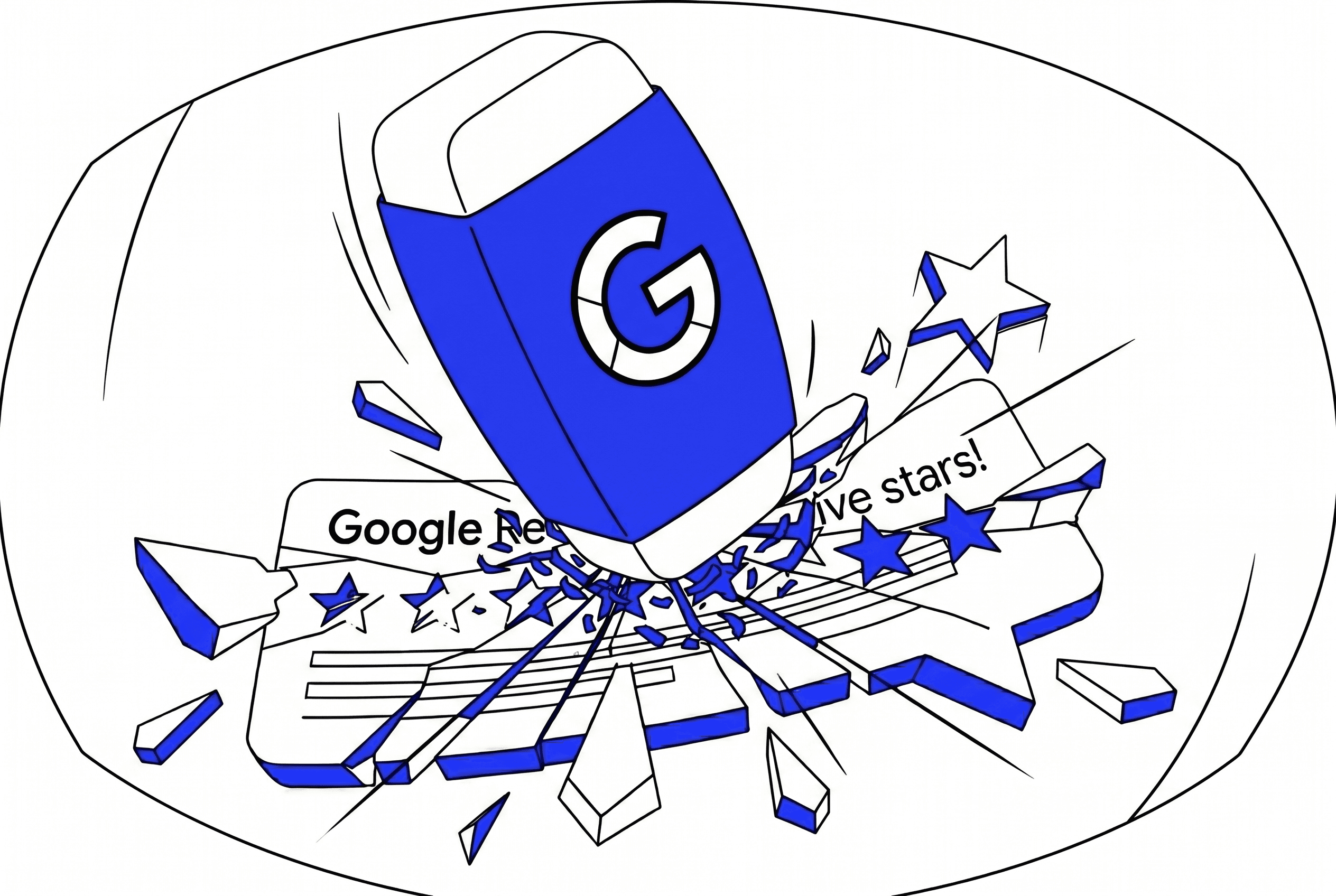
The seven most common reasons Google removes reviews, and what restaurants can do to get them back.
TL;DR
Google removes reviews for seven main reasons: spam filters, policy violations, account deletion, merged profiles, competitor flagging, prohibited content, and suspicious reviewer patterns.
Most disappearing reviews are recoverable by filing an appeal with the Google Business Profile support team, with supporting evidence.
Restaurants losing five or more reviews per month should set up systematic monitoring rather than reacting case by case.
Why do Google reviews disappear?
Google reviews disappear when they trigger the platform's spam filter, violate policy, or are removed by the reviewer. The platform also removes reviews automatically when business profiles are merged, deleted, or suspended. In most cases, the review can be recovered by filing a reinstatement request with supporting evidence through the Google Business Profile help center.
For multi-location restaurants, reviews disappearing is usually not random. Most cases fit one of seven patterns. Working through them in order, from most common to least, is the fastest way to recover what can be recovered and stop the loss at the source.
The seven reasons reviews disappear
1. Google's spam filter flagged the review
This is by far the most common cause. Google's automated system scans every new review for signals that suggest it is fake, incentivized, or posted under a fraudulent pattern. The filter is aggressive and catches legitimate reviews regularly.
Common triggers include: multiple reviews from the same IP address in a short window (often caused by staff asking customers to review from an in-restaurant tablet), reviews that use identical phrasing, reviews posted by accounts with no prior activity, and reviews with excessive emoji or exclamation marks.
The fix is usually not to appeal, but to change the collection method. Ask customers to review from their own devices, spread the asks over time, and avoid scripted language.
2. The review violated Google's content policy
Google removes reviews that contain prohibited content: profanity, hate speech, sexually explicit material, personal information about staff, or content unrelated to the business. A negative review is not itself a violation. The language used inside it can be.
If a review was removed for a policy violation and you believe it was wrongly flagged, you can appeal through the Google Business Profile help center. Be specific about why the content does not violate policy. Vague appeals rarely succeed.
3. The reviewer deleted their account or the review
When a Google account is deleted, all reviews posted by that account disappear. The same applies when the reviewer manually deletes a review from their own profile. This is outside the business owner's control and the review cannot be restored.
A pattern of reviews disappearing through account deletion sometimes indicates the reviews were posted by staff or friends of staff who later cleaned up their profiles. If this looks like the case, the underlying issue is the review collection practice, not the disappearance itself.
4. The business profile was merged, moved, or suspended
If your business profile was merged with another listing (common for franchises with duplicates), moved to a new address, or suspended for verification issues, reviews can detach from the profile. In merge cases, reviews should move with the primary listing, but this often breaks.
For franchise brands, duplicate listings are a frequent source of lost reviews. If you see an entire location's review history disappear, check whether the profile has been merged or temporarily suspended. Google Business Profile's help center has a merge request form that can consolidate reviews correctly.
5. A competitor flagged the review as inappropriate
Any Google user can flag a review for violating policy. Google's moderators review flags and sometimes remove reviews based on them. Coordinated flagging by competitors or disgruntled parties can remove legitimate reviews, both positive and negative.
If a review was removed after being flagged and you believe the flag was wrongful, the appeals process is the same as for policy violations. Document the review content, the customer's legitimacy, and any context that proves the review was genuine.
6. The review contained prohibited links or promotional content
Google removes reviews that include links, promotional language for other businesses, or affiliate content. This catches some legitimate reviews where a customer linked to their social media or mentioned a competitor by name.
This category is rarely worth appealing. Even if the customer posts a new version, the new review will start with zero age, which slightly lowers its ranking weight.
7. The reviewer was flagged as suspicious across Google
If a Google account is later flagged for suspicious activity (fake reviews, coordinated behavior, or account hijacking), all of that account's reviews can be removed retroactively. This is a platform-wide action, not business-specific.
There is no recovery path for these. The account was deemed untrustworthy and its history is invalidated.
How to recover a review that disappeared
For reviews removed by the spam filter or due to an alleged policy violation, the Google Business Profile help center is the path. The process works in three steps.
Open the Google Business Profile help center and navigate to Report a reviews removal issue. Select the specific review from the drop-down list of your recent reviews.
Explain why the review should be reinstated. Be specific. Cite the exact part of Google's review policy the review does not violate. Vague appeals ('this review was genuine, please restore it') rarely work.
Submit supporting evidence. This can include the customer's order confirmation, receipts, or delivery records that confirm they visited the location.
Appeals typically take between two and four weeks to resolve. Google does not always notify you of the outcome. Set a reminder to check the profile after three weeks and log the status.
How to stop the loss before it happens
For restaurants losing five or more reviews per month, case-by-case recovery is a losing strategy. Three operational changes reduce the rate of disappearance.
Change how you ask. Stop asking customers to leave reviews from in-restaurant tablets or staff devices. This is the single biggest trigger for spam filter removal. Ask customers to review from their own devices, ideally from a unique link in a follow-up message, spread across the week.
Stop incentivizing reviews directly. Offering discounts, free items, or rewards in exchange for reviews violates Google policy. Even if the staff does it informally, the pattern is detectable. Incentivize feedback generally (through loyalty programs, for example), not reviews specifically.
Monitor disappearance as a metric, not an incident. Track how many reviews you collected each month against how many are still live after 30 and 60 days. A significant gap points to a systemic collection problem, not bad luck.
How to use Sira to track review disappearance
Sira's review management module monitors review activity across Google, delivery platforms, and social channels continuously. For multi-location brands, a simple monthly routine catches disappearance patterns before they compound.
Pull the total review count per location at the start and end of the month. A drop of more than three percent at any single location warrants investigation.
Flag any location where the response rate dropped below the brand average during the month. Unresponded reviews are the most common reason competitor flagging succeeds.
Review the collection method at any location showing repeated disappearance. In-store tablet requests, staff-initiated reviews, and scripted wording are the usual culprits.
Log every appeal submitted and the outcome.
Frequently asked questions
How long do review appeals take?
Most appeals resolve within two to four weeks. Google does not always notify you directly, so check the profile manually after three weeks.
Can I do anything about a review that was deleted by the reviewer?
No. If the reviewer deletes their account or their review, the review is gone permanently.
Does Google's spam filter remove negative reviews more than positive ones?
The filter is sentiment-neutral. It flags patterns that look inauthentic, whether the review is positive or negative.
Is there a way to prevent Google from removing legitimate reviews?
Not entirely. The spam filter is aggressive and will catch some legitimate reviews. The best defense is to make your collection process look as organic as possible.
Should I reply to a review that later disappears?
If you already replied and the review was removed, your reply will usually disappear with it. If it remains orphaned, it will not be visible to customers. No action needed.